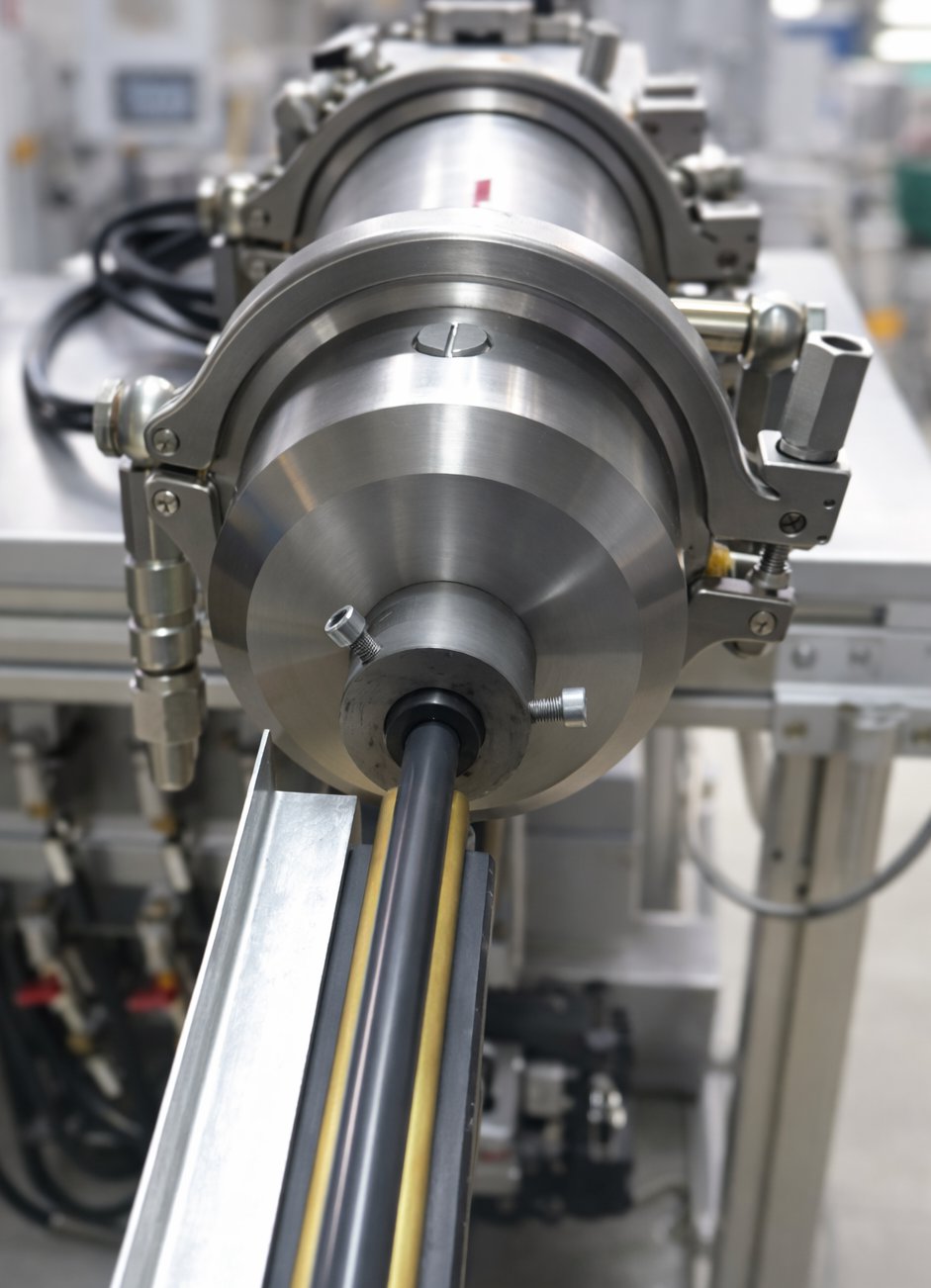
Production Line Development
Complete engineering and industrial implementation of a fully automated extrusion line for high-precision cemented carbide rods.
View Case Study →
Complete development and industrialisation of a new cemented carbide rod product family using simulation-driven design, advanced manufacturing engineering and process optimisation.
Cemented Carbide Manufacturing
Automated Extrusion
Engineering Project Lead
Completed
The existing cemented carbide rod portfolio was based on an unstable blank geometry and an extrusion process that was susceptible to manufacturing-related defects. Surface cracks, dimensional instability and limited process capability prevented reliable production of the next generation of cutting tool blanks.
A completely new product family comprising 48 different cross-sectional geometries with diameters ranging from 1.0 mm to 10.0 mm was developed while maintaining a maximum geometry deviation of only ±0.03 mm.
Beyond introducing a new product family, the objective was to redesign both the product and the manufacturing process. Simulation-driven engineering enabled optimisation of the extrusion geometry, significantly reducing process-related defects, development effort, manufacturing cost and process variability.
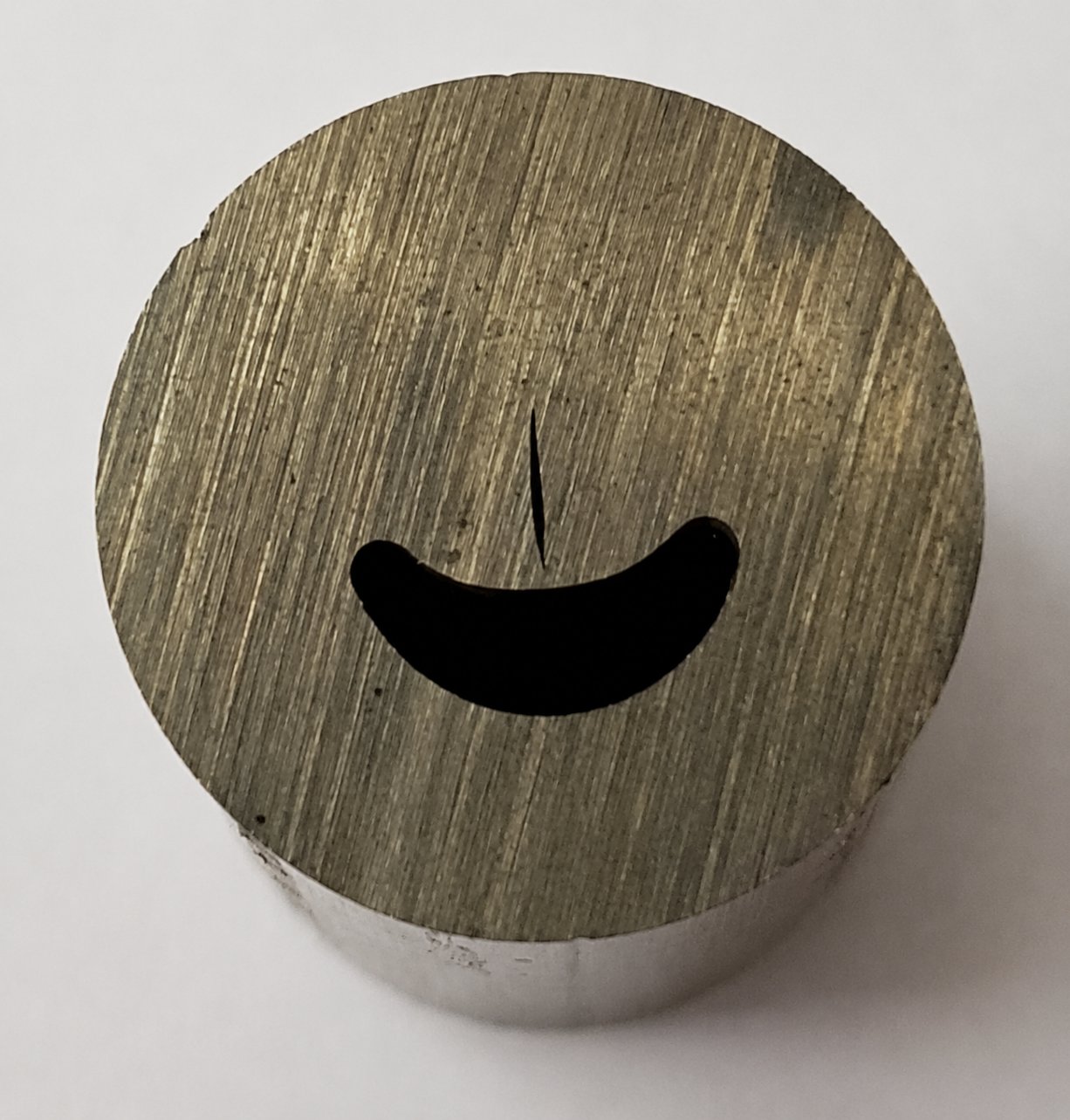
Typical extrusion defect caused by the previous blank geometry and limited process stability.
The project covered the complete development and industrialisation of a new cemented carbide rod product family, from cross-section design and simulation-driven tool development through process validation and serial production.
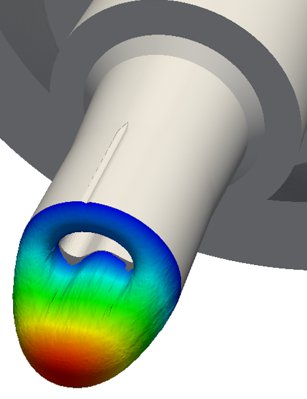
Advanced flow simulation was introduced to optimise the extrusion process before manufacturing physical tooling. Virtual analysis enabled rapid evaluation of material flow, pressure distribution and geometry formation.
Instead of relying solely on conventional trial-and-error development, multiple design iterations were completed digitally, significantly reducing prototype manufacturing and engineering effort.
The simulation results formed the basis for extrusion tool optimisation, improved process stability and faster product industrialisation while maintaining the required geometric accuracy across all product variants.
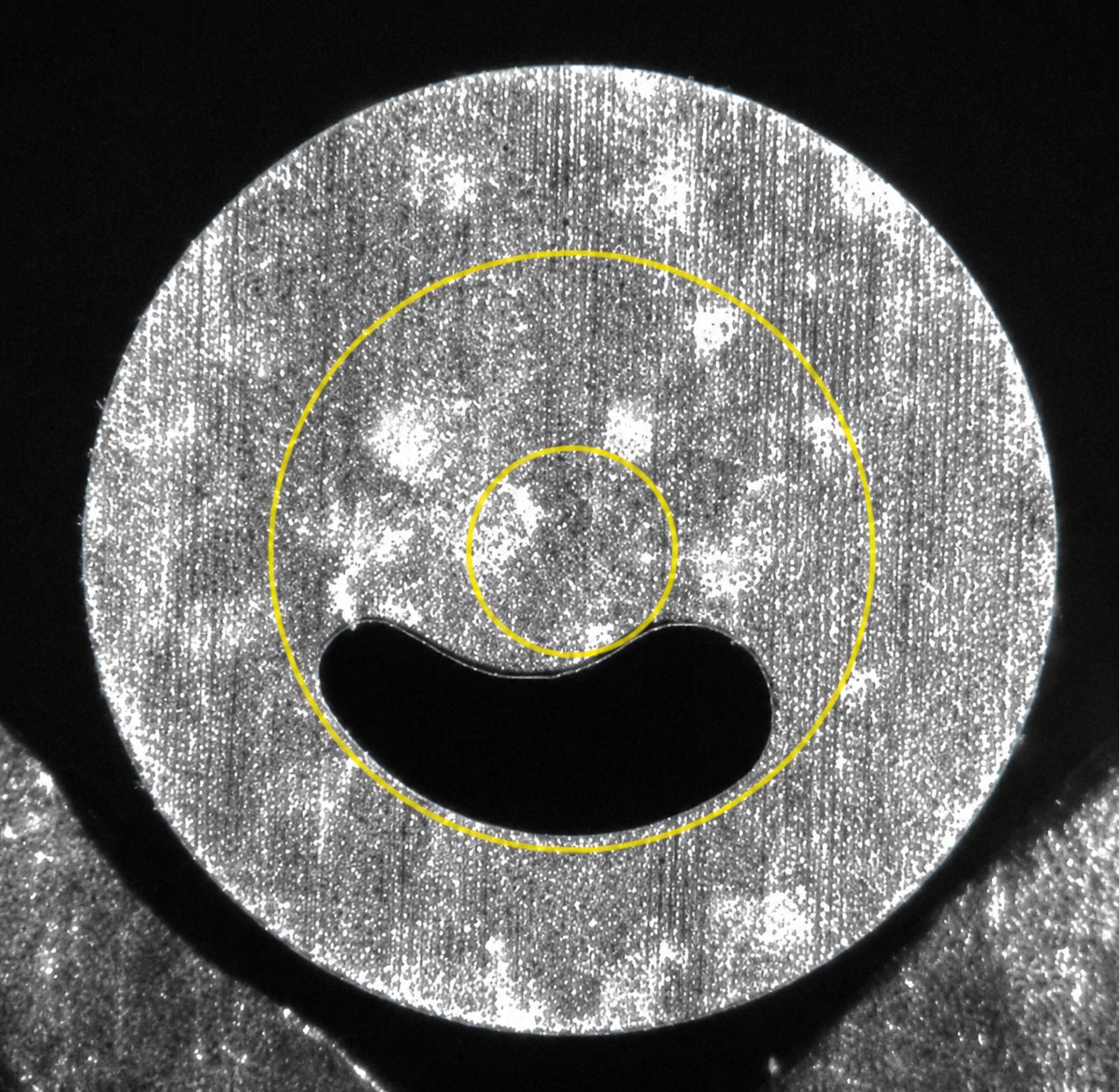
Numerical simulation results were verified using high-precision optical measurement to confirm the dimensional accuracy of every newly developed cross-sectional geometry.
The comparison between simulated and manufactured geometries enabled rapid optimisation of the extrusion tooling while significantly reducing physical trial iterations.
Continuous validation throughout the development process established confidence in both the simulation model and the final manufacturing concept before serial production.
Following successful validation, the optimised extrusion tools were transferred into serial production for the complete product family.
Stable manufacturing parameters, improved extrusion geometry and validated tooling enabled reliable production across all 48 cross-sectional variants while maintaining the required dimensional accuracy.
The new manufacturing concept significantly improved production yield, reduced manufacturing costs and established a robust platform for future product development.
Simulation-driven product development and manufacturing optimisation significantly reduced development effort while improving process capability, manufacturing efficiency and product quality across the complete product family.
Geometries
Tool Diameter
GD&T
Development Time
Development Costs
Increased Yield
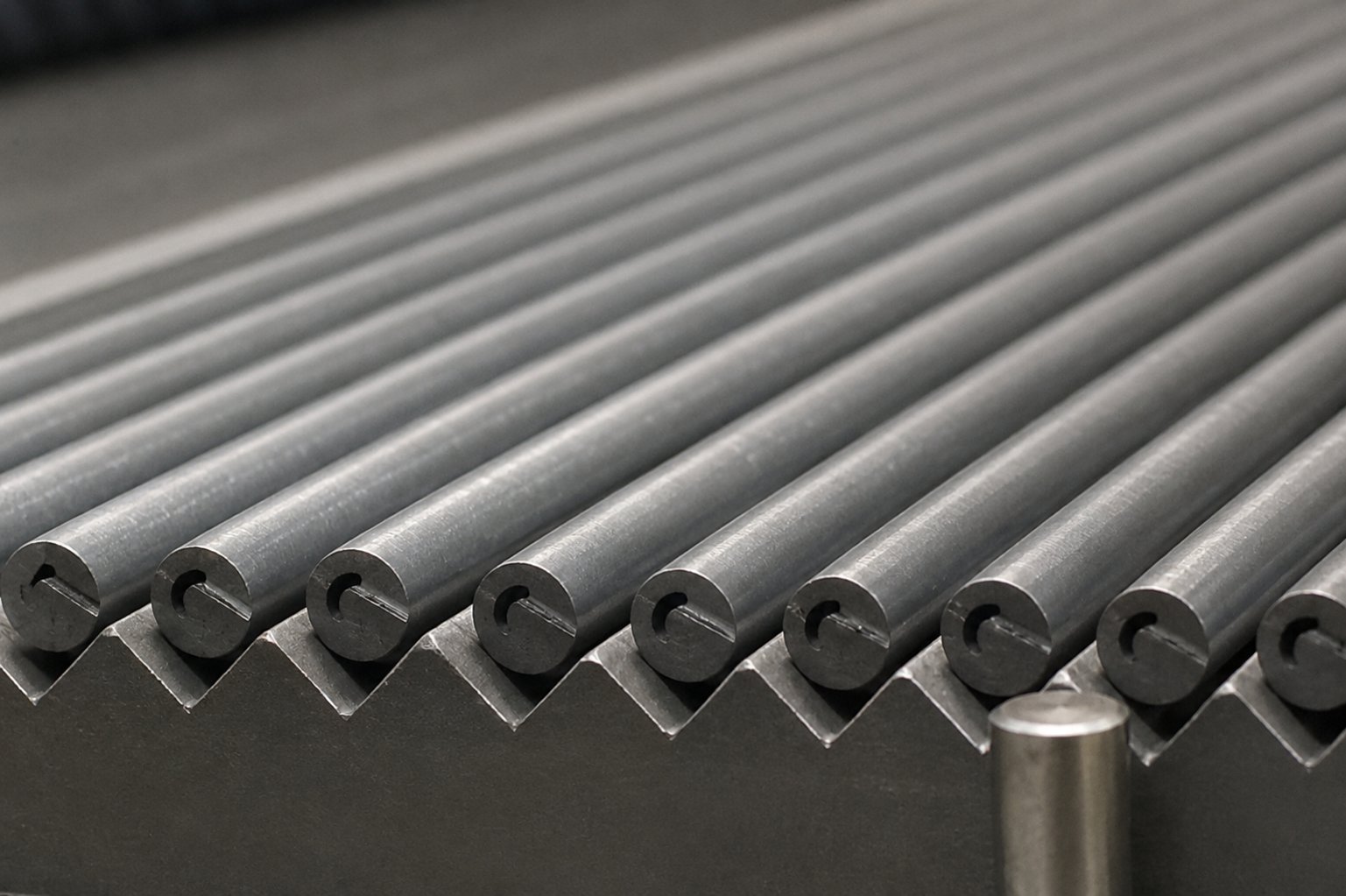
The newly developed product family successfully entered serial production and fulfilled the demanding dimensional, geometric and manufacturing requirements for high-performance cutting tool applications.
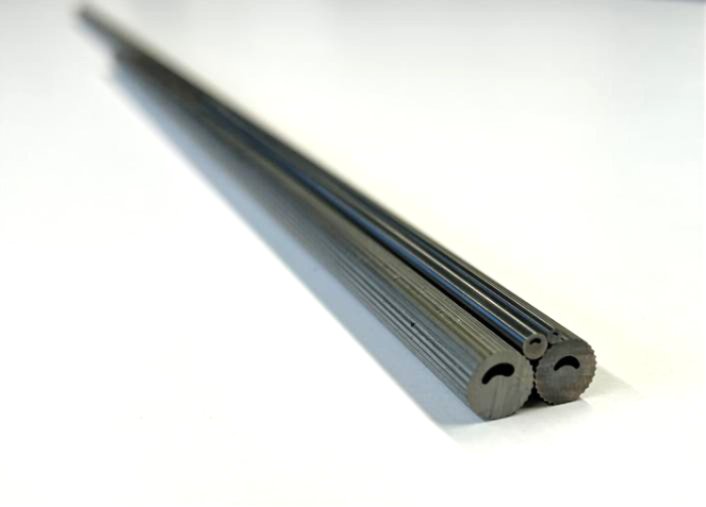
Sintered cemented carbide rods representing the successfully industrialised product family.
This project demonstrates the successful development and industrialisation of a completely new cemented carbide rod product family using simulation-driven engineering and advanced manufacturing technologies.
By combining virtual process simulation, precision tool development, experimental validation and manufacturing optimisation, engineering effort, development time and production costs were significantly reduced while improving process capability and manufacturing yield.
The project established a robust manufacturing platform for 48 product variants and demonstrated how digital engineering can accelerate industrial innovation from product concept to stable serial production.
Looking to bring a new product into stable production? Let's get in touch →
Discover additional manufacturing and industrialisation projects.
Complete engineering and industrial implementation of a fully automated extrusion line for high-precision cemented carbide rods.
View Case Study →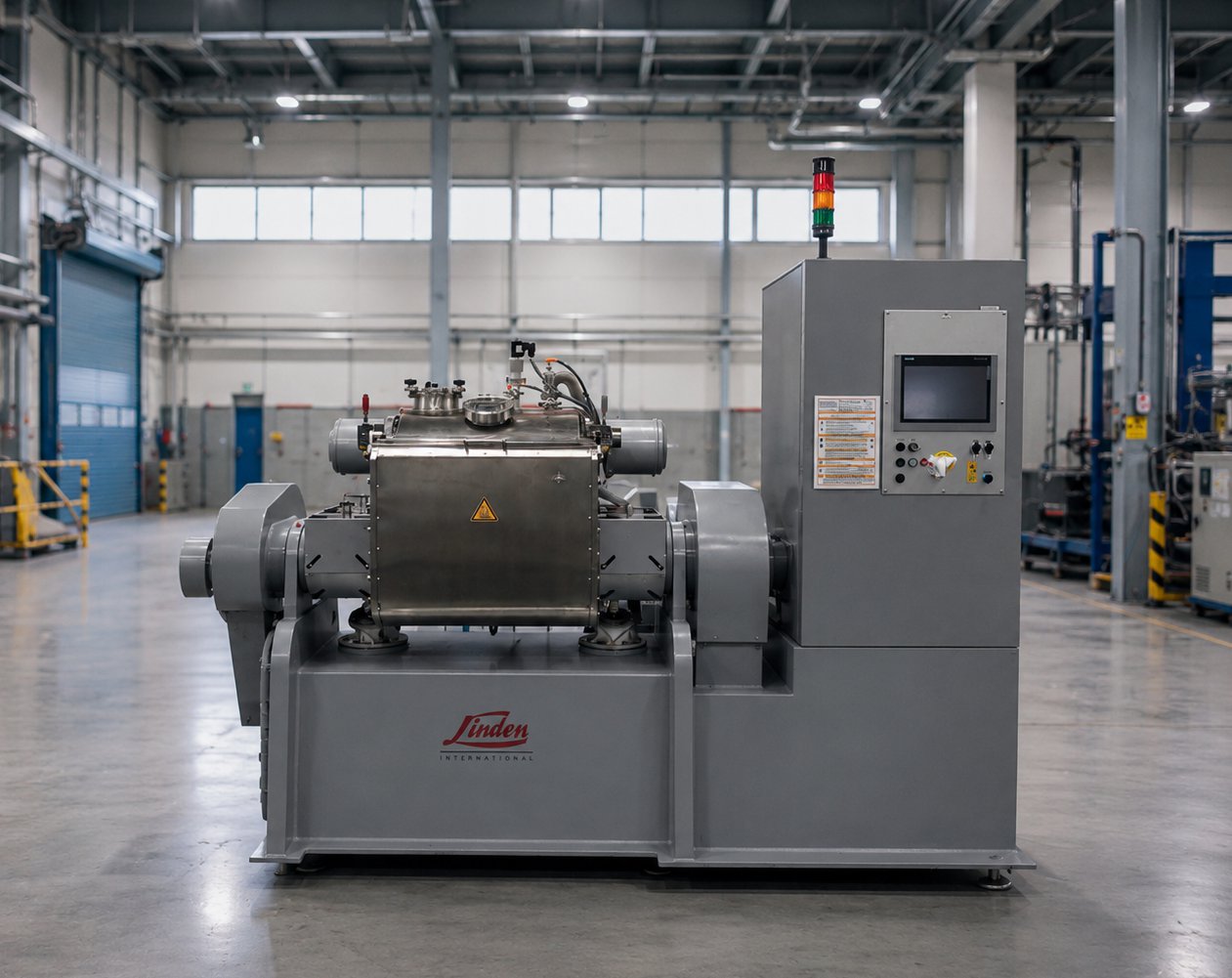
Installing a new kneading machine for consistent, high-capacity powder mixing.
View Case Study →