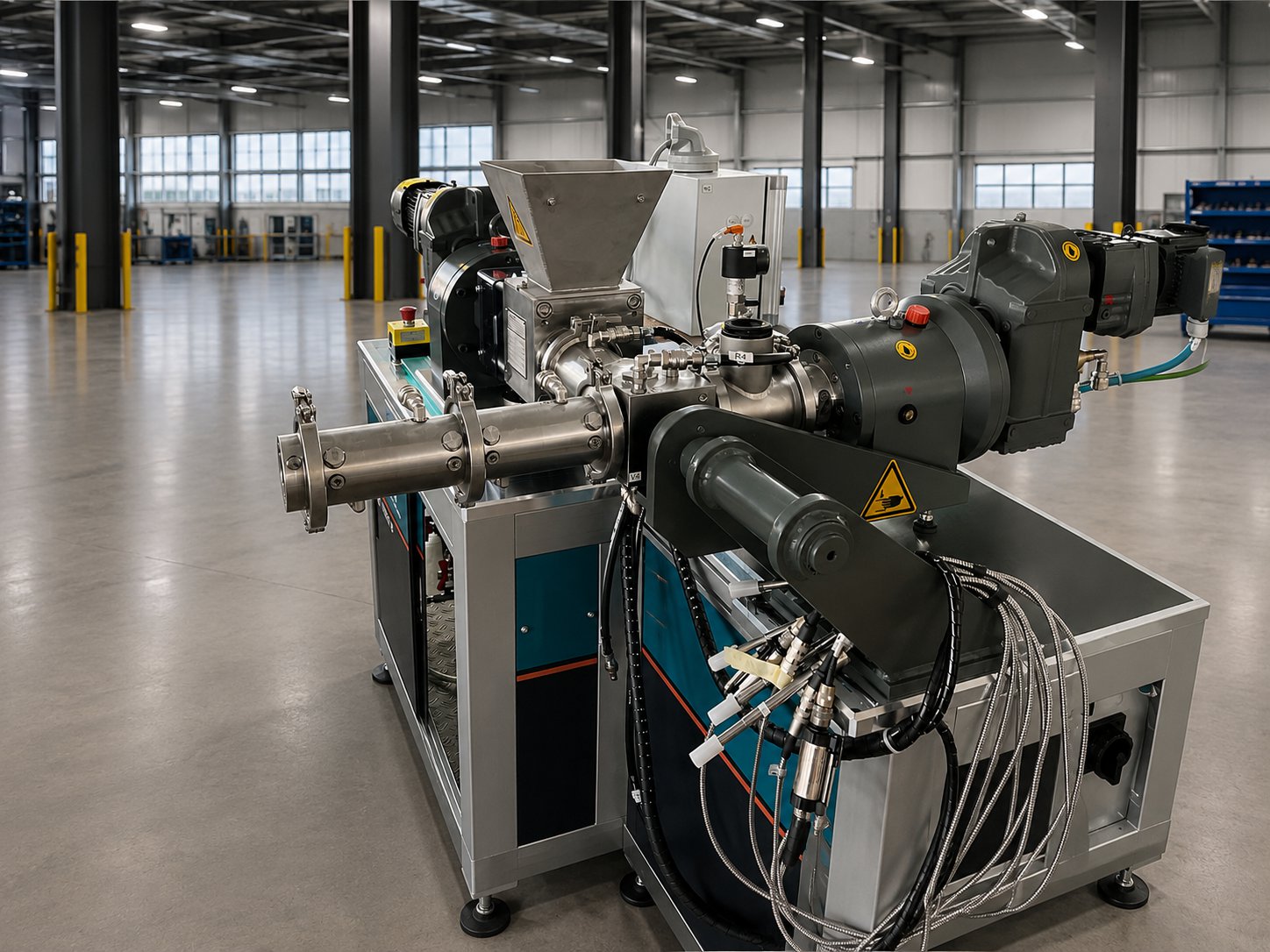
Micro-Extrusion System for Complex Geometries
Selection and pre-series validation of a new micro-extrusion system, in cooperation with ECT-Kema GmbH.
View Case Study →
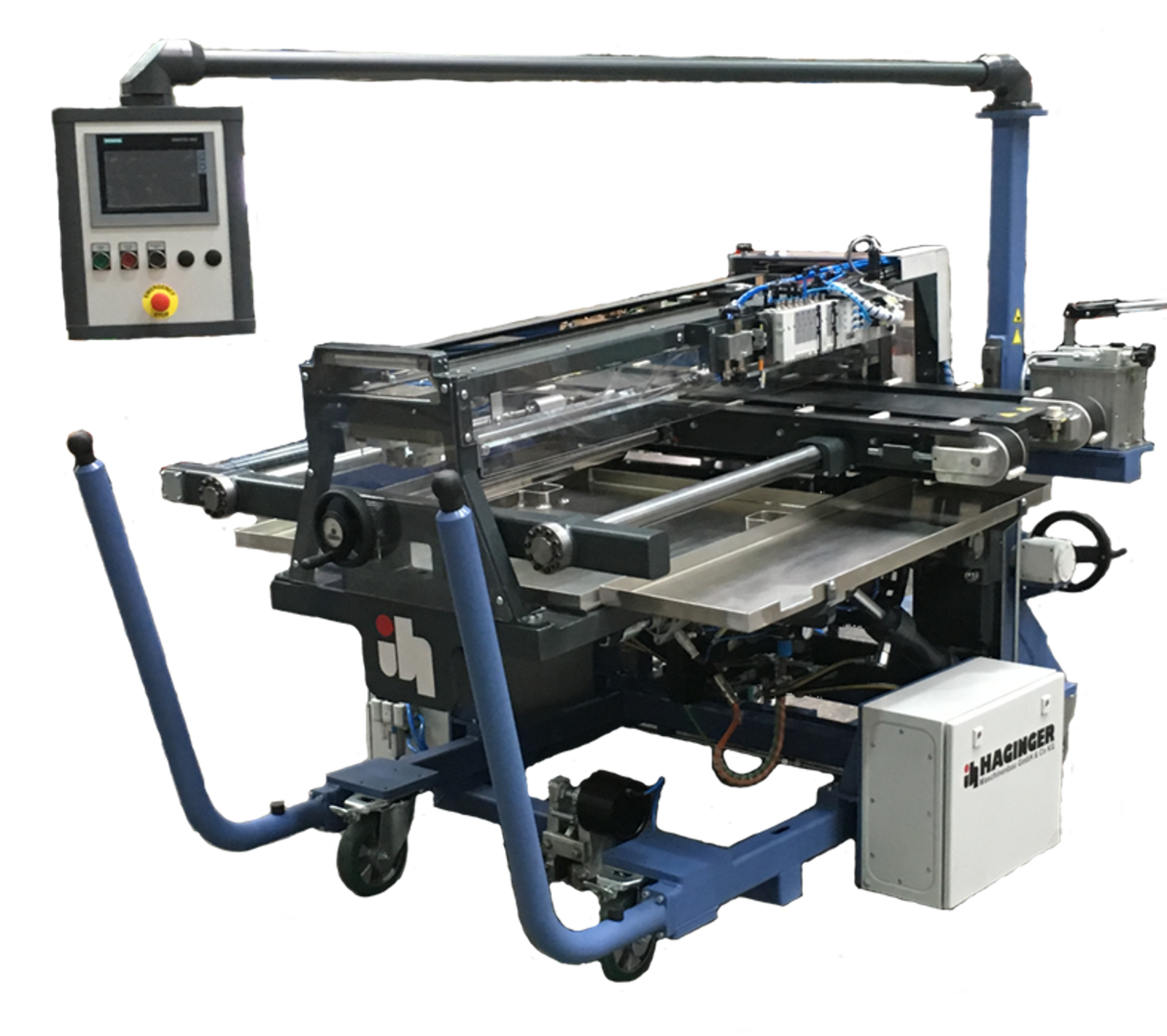
Technical specification and industrialisation of a modular handling system for freshly extruded cemented carbide rods, developed in cooperation with Haginger Maschinenbau, covering pick-up, transport and precision placement onto sintering plates.
Cemented Carbide Manufacturing
Automated Rod Handling & Extrusion
Technical Specification & Supplier Coordination
Completed
A cemented carbide manufacturer produces rod blanks for rotating cutting tools and wear-protection applications on extrusion presses. Straight after extrusion, the continuous green strand has to be cut to length and placed onto graphite sintering plates before it can be sintered.
At this stage the material is still soft and highly sensitive to mechanical stress. Any stretching, compression or impact during cutting or placement directly affects roundness, dimensional accuracy and pre-damage-free surface quality after sintering. The system also had to cover a wide product range, from 3 mm to 13 mm rod diameter, while running reliably across a continuous 3-shift operation.
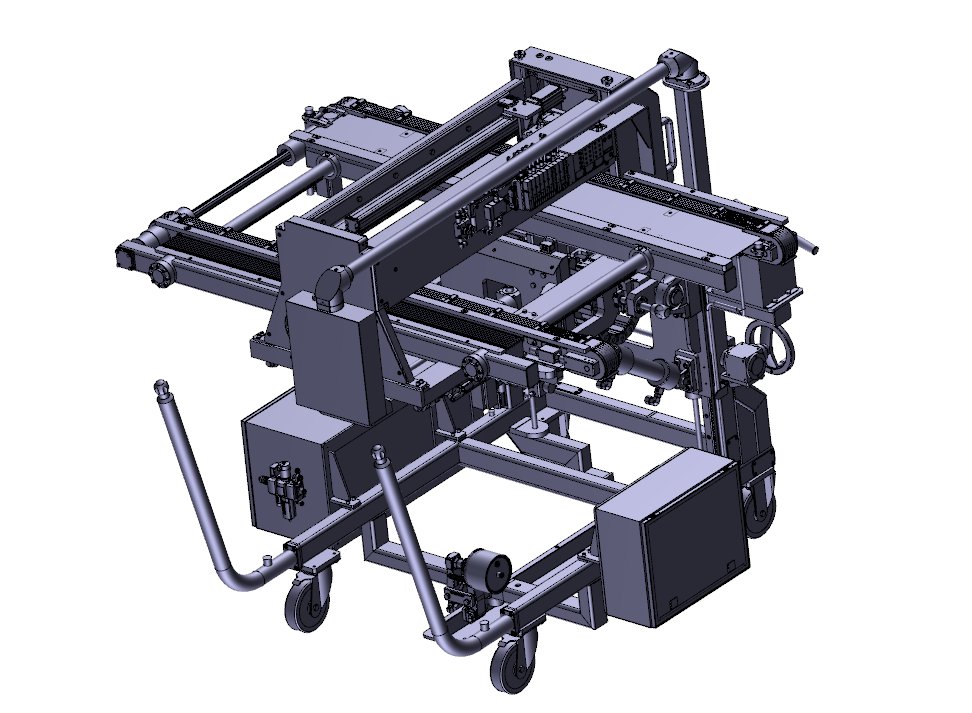
The specification defined three decoupled but precisely aligned functional modules, each individually adjustable in height and angle while forming one continuous working plane.
Clear division of responsibilities between BS PM Solutions and Haginger Maschinenbau.

The cutting unit is mounted on a servo-driven ball screw and accelerates in the direction of extrusion until it matches the press speed of the moving strand.
The cutting carriage itself is height- and side-adjustable and runs on its own guide rail, so it can always be set centrically to the strand regardless of rod diameter. This flying-cut principle was the key requirement for meeting the roundness and pre-damage-free surface tolerances demanded by the downstream sintering and grinding process.
Once separated, each rod travels on a cushion of air toward its final drop position, avoiding any mechanical contact that could mark or deform the still-soft material. A multi-chamber air supply, with three independently regulated chambers per rail side, adapts the air flow to the press speed and to four diameter bands between 3 mm and 13 mm.
Once the rod reaches its defined position, the air cushion is switched off and a brief vacuum pulse brings it to a controlled stop within 0.1 seconds, ready for precise, low-impact placement onto the sintering plate below.
The completed system met the specified precision and stiffness requirements while covering the full product range on a single, serviceable platform.
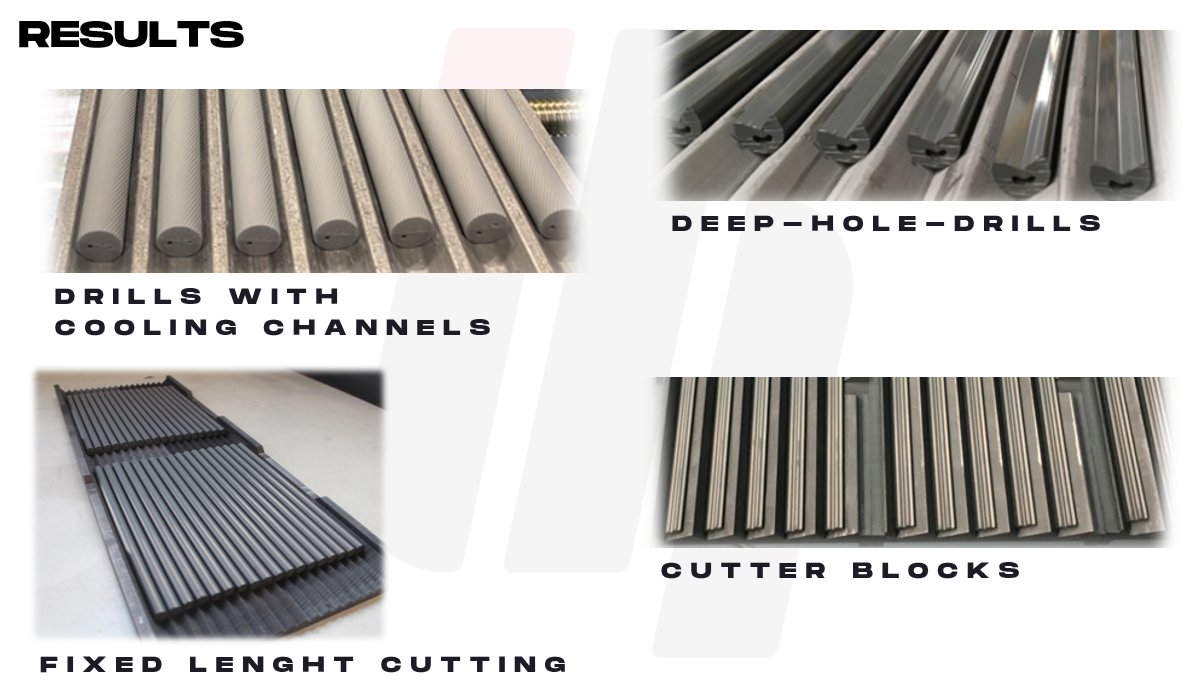
This project demonstrates the successful specification and industrialisation of a modular handling system for cemented carbide extrusion rods, developed in close cooperation with Haginger Maschinenbau.
By combining a speed-synchronised flying cut, diameter-adaptive air-cushion transport and precision plate positioning, the system reliably delivers deformation-free rods across a wide product range, supporting continuous 3-shift production while remaining fully serviceable through its modular design.
Looking to industrialise your own handling or separation process? Let's get in touch →
Discover additional manufacturing and industrialisation projects.
Selection and pre-series validation of a new micro-extrusion system, in cooperation with ECT-Kema GmbH.
View Case Study →
A tool design and root cause investigation programme that eliminated cracking at the direct pressed chamfer while raising press productivity.
View Case Study →